September-hero-image
Newsletter

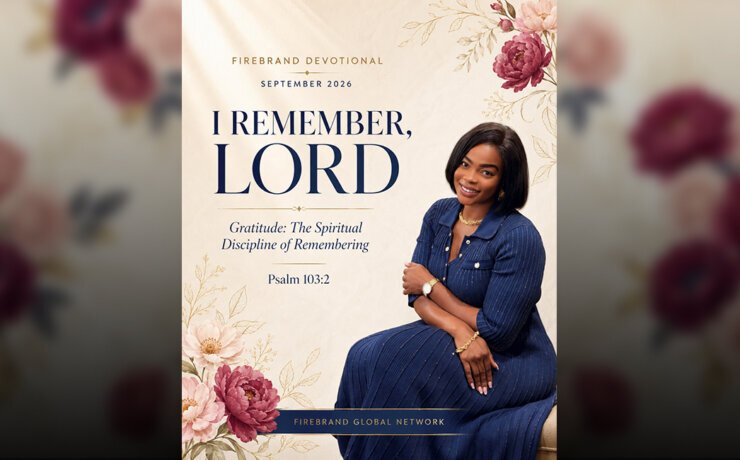
I Remember Lord – Gratitude: The Spiritual Discipline of Remembering

September Edition — “Bless the Lord, O my soul, and forget not all his benefits.” — Psalm 103:2

Dear Firebrand Generation,

S

September is here, and we have not forgotten you. Though we have been quiet these past few months, we have not been absent. This has been a season of reflection, realignment, and allowing what God has planted to take root. As we return, we begin with one simple word: gratitude. Before we reach for what is next, let us remember what God has already done.

Do Not Forget

We remember the disappointment, the closed door, and the unanswered prayer, but sometimes overlook the protection, provision, mercy, and grace that carried us through. Gratitude is more than an emotion. It is the spiritual discipline of intentionally remembering God’s faithfulness.

It does not deny pain. It simply declares:

“Even here, God has been faithful.” Do not allow what you are still waiting for to make you forget what God has already done.

Remember the Prayers You Once Prayed

Some of what feels ordinary today was once something you desperately prayed for.

The opportunity you now overlook may have been the door you once asked God to open. The peace you enjoy today may have followed years of praying for relief.

Pause and remember:

  • The prayers He answered.
  • The people He sent.
  • The provision that came at the right time.
  • The doors He opened or closed.
  • The strength He gave when yours was gone.
  • The seasons you thought would break you but did not.

You are still here. That is also a testimony.

Survival Is a Testimony

We often celebrate visible victories healing, promotion, marriage, financial breakthrough but some of God’s greatest works cannot be photographed.

Sometimes the miracle is finding courage to begin again.

Sometimes it is that your heart remains tender.

Sometimes it is simply that you survived a season no one knew you were fighting through.

Peace after chaos, hope after disappointment, clarity after confusion, and strength after loss are also evidence of God’s sustaining grace.

Do not minimize what God carried you through simply because others did not see it.

Gratitude Changes Our Posture

Gratitude may not immediately change our circumstances, but it changes how we face them. Complaint focuses on what is missing. Gratitude remembers the One who has remained faithful.

Instead of asking, “Why don’t I have more?” gratitude asks: “Lord, how can I honor You with what You have already placed in my hands?”

When we remember correctly, worship becomes our response.

Gratitude Changes Our Posture

Gratitude may not immediately change our circumstances, but it changes how we face them. Complaint focuses on what is missing. Gratitude remembers the One who has remained faithful.

Instead of asking, “Why don’t I have more?” gratitude asks: “Lord, how can I honor You with what You have already placed in my hands?”

When we remember correctly, worship becomes our response.

Before You Ask What Is Next

There is nothing wrong with new dreams, prayers, or expectations. But before asking for more, acknowledge what God has already given.

Before asking for another door, thank Him for the doors already opened.

Before asking for greater influence, thank Him for the lives you can already touch.

Before asking for more resources, thank Him for what is already in your hands.

Before asking for the next level, thank Him for the grace that sustained you on this one.

Reflection Questions

  • What prayer are you currently living in that you once asked God to answer?
  • What did God protect or redirect you from?


A Prayer of Gratitude

Father, thank You.

Thank You for every visible blessing and every unseen act of protection. Thank You for answering prayers, open doors, and even the doors You closed.

I remember Your goodness.
I remember Your mercy.
I remember Your protection.
I remember Your provision.
I remember Your faithfulness.

Thank You for who You have been, who You are, and who You will always be.

In Jesus’ name, amen.

Seven Days of Remembrance

Day 1 — His Protection: What did God protect or deliver you from?
Day 2 — His Provision: When did God provide exactly what you needed?
Day 3 — His People: Who did God use to strengthen or support you?
Day 4 — His Redirection: What closed door ultimately protected you?
Day 5 — His Sustaining Grace: What difficult season did God carry you through?
Day 6 — Your Growth: How has God matured, healed, or transformed you?
Day 7 — An Answered Prayer: What do you have today that you once prayed for?

Journal each day and end with thanksgiving. At the end of seven days, read what you have written and worship not because everything is perfect, but because God has remained faithful.

We remember.
We give thanks.

With love and fire,
Dora Mensah

May-hero-image
Newsletter

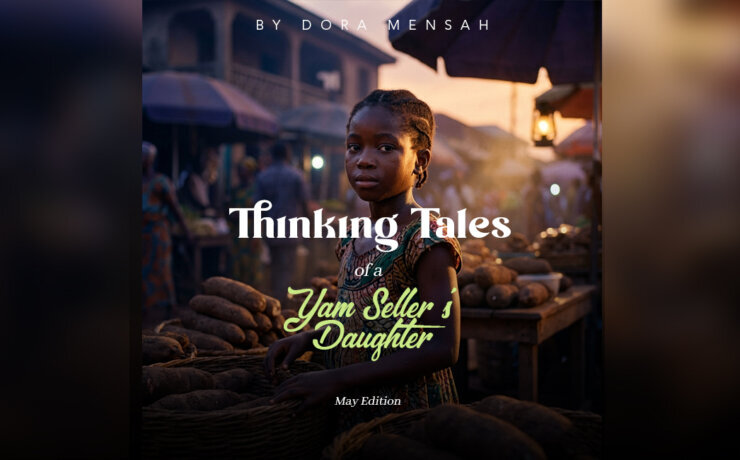
The Girl Who Carried More Than Yams

May Edition — (Introducing: Thinking Tales of a Yam Seller’s Daughter)

Dear Firebrand Generation,

I

I once carried yams on my head without realizing I was carrying my future too. Not just weight but responsibility, expectation, and a kind of strength I never asked for. The market did not wait for me to grow up. It handed me adulthood early and said, Figure it out.

In Mamobi, survival had a sound. Coins clinking against wooden tables. Women shouting prices across narrow pathways. Metal bowls scraping against concrete floors. Generators humming through the heat. The smell of pepper, sweat, dust, and roasted plantain folding itself into the air.

Life negotiated itself loudly there. Nothing was hidden. Not hunger. Not struggle. Not ambition. And somewhere in the middle of all that noise was my mother— selling yams with tired hands and steady dignity.

Before the classrooms, before the polished English, before the titles and platforms, there was her. A woman who sold yams and still somehow managed to raise leaders. I grew up between two worlds. One where the ground was dust and survival sat out in the open for everyone to see. And another where the floors were marble, the rules were quiet, and excellence was measured by how well you concealed your struggle.

Mamobi taught me how to survive. East Legon taught me how to perform composure. But my mother taught me something deeper than both. She taught me how to remain human. Not through speeches. Not through lectures. But through the ordinary ways she moved through people. How she greeted everyone. How she treated people who could offer her nothing in return.

How she continued giving even when giving cost her something. As a child, I thought those moments were small. Now I realize they were building me quietly. And maybe some of you are in that kind of season now—a season that feels ordinary, heavy, unnoticed. But what if the season you call “small” is actually shaping the strongest parts of you?

Recently, I started writing these memories down. Not just as stories, but as meaning. Fragments about overlooked people. Hidden lessons. Ordinary moments that refused to leave me. And somewhere in the middle of remembering, I realized something: This was never just my story. It was a blueprint.

In Mamobi, there were people everyone warned you about. Addicts, Restless men. People mothers told their children to avoid. The kind of people you crossed the street to escape.

But somehow… They never crossed us. They knew my mother. Not simply as a yam seller, but as a woman who still acknowledged their humanity after the rest of the world stopped trying. She greeted them. Sometimes she fed them. Sometimes she simply spoke to them like they still mattered. And strangely enough, they never forgot it.

There were days my sister and I had to be picked up from school while Mama remained at the stall. And somehow, we were never alone. They would come for us. Watching.
Walking beside us. Protecting us without ever announcing they were doing so.

No explanations.
No speeches.
Just presence.

Somewhere along the line, they even gave me a nickname:Cowbell. And to this day, that memory still sits in my spirit strangely. Because here is the part that unsettles me even now: They stole from other people. Everyone knew it. But they never stole from us.

Not a coin.
Not a yam.
Not even peace.

And that was the first time I realized something that adulthood would later confirm repeatedly: People are not always what your fear labels them to be. Sometimes the people the world calls dangerous are the very ones assigned to protect you. My mother never taught me that lesson directly. She lived it.

She showed me that how you treat people matters more than who they are at their worst. But as life went on, I learned another truth too: A good heart still needs boundaries.

Because not every story of kindness ends like this one. Not every person you help protects you back. And not every “honest thief” stays honest forever There are some things you learn in survival. And then there are things you learn in healing.

This was survival. What came after required something deeper. But that story… is for another day. For now, These are simply fragments small pieces of a girl a market,
a mother, and the lessons hidden quietly between them. A snippet from The Thinking Tales of a Yam Seller’s Daughter.

With love,
Dora Mensah
A proud yam seller’s daughter

Quote of the Month
But before the classrooms, before the structure, before the titles…
The real foundation was my mother.
– Dora Mensah

April-hero-image
Newsletter

Confessions of a Firebrand

I Didn’t Heal… I Just Learned to Function

Dear Firebrand Generation,

T

Today I have a confession. For a long time, I believed I had healed. I thought healing meant that I could still show up, still build, still lead, still move forward despite everything I had been through. If I could keep going, I must have been whole… right? But recently I had to sit with an uncomfortable truth. I didn’t heal. I simply learned how to function. And there is a difference. Somewhere along the way, I became very good at carrying pain while still producing results. I learned how to perform strength. I learned how to keep moving even when parts of me were still wounded. From the outside it looked like resilience. But inside, I was still operating from survival.

When Pain Becomes the Ignition

As I began reflecting on my own patterns, I started to understand something deeper about the way pain had shaped me. What I thought was simply determination…was conditioning. Not just emotional conditioning, but psychological conditioning. Over time, the body and mind begin to associate struggle with movement. Pain becomes activation. Chaos becomes momentum. Adversity becomes identity. When life hurts, we move faster.

When someone doubts us, we rise higher. When something breaks, we prove something. Without realizing it, pain becomes the ignition.

The Adrenaline of Proving Something

I noticed something about myself. Some of my greatest bursts of energy came when someone doubted me. When someone said I couldn’t.

When life presented another challenge. Something inside me would come alive. It created an adrenaline rush, the urgency of survival, the determination to prove something, the fire that says watch me. For years, I told myself that this was simply strength. But recently I began asking a deeper question. What happens when the adrenaline fades? What happens when life becomes peaceful? Sometimes peace feels unfamiliar.

Sometimes stillness feels slow. Sometimes calm feels uncomfortable, because we have been conditioned to move when pain appears.

A Personal Realization

There was a season in my life when it felt like every breakthrough came after a breaking. Every victory came after another battle. And somewhere along the way I began to believe that this was simply how purpose worked. That if my story was going to matter, it had to hurt first. That the bigger the pain, the greater the purpose. But recently I began to question that belief.

My Confession

So here is my confession. Somewhere along the way, I became so used to pain activating me that I began to depend on it. Not intentionally. But subconsciously. Pain became the ignition.

The push. The proof. The fuel.

But I am beginning to realize something beautiful. My story can still be meaningful without always being painful.

The Lie We Learned

Somewhere along the way we believed the lie that pain gives our story value. But the truth is this: The story doesn’t have to be painful to be impactful.

Impact can come from wisdom.

Impact can come from growth.

Impact can come from peace.

Not every meaningful chapter of our lives must begin with suffering.

Moving Into the Next Quarter

As we move into the next quarter of this year, I want to remind you of something many of us were never taught: You do not need another wound to become who you are meant to be. You do not need another breaking to prove your strength. Your life can be meaningful, powerful, and transformative without constant suffering. The story doesn’t have to be painful to be impactful.

Affirmations for a Renewed Mind

As we step into this next quarter, carry these declarations with you:

  • I do not need pain to activate my purpose.
  • I do not need pain to prove my power.
  • I am allowed to grow without breaking first.
  • My story can be impactful without being painful.
  • I chose peace as my new place of productivity.


Dear Firebrand Generation, This was my confession. Perhaps it is yours too.


Quote of the Month

The story doesnt have to be painful to be Impactful ”

– Dora Mensah